Your Baby Is Learning to Walk — How to Make Your Home Safe
 Category Category | Motor activity |
|---|

Medically reviewed by pediatrician Alexandra Zglavosiy
When a baby starts walking, home becomes full of new risks — but they’re easy to manage. A few simple adjustments can make the space safe without limiting exploration. The goal isn’t to restrict, but to offer a cozy, prepared environment where your child can safely discover the world.


sprouty
Sleep, feeding, and milestones in one app



Quick takeaways
- The most common injuries at 9–18 months are falls, bumps, burns, and poisonings.
- Install safety gates, anchor furniture, and remove small or toxic items.
- Simple parental education and mindful prevention reduce household injuries by 60%.
- Safety doesn’t mean isolation — it means a space where your baby can explore under supervision.
Why it matters: development and danger go hand in hand
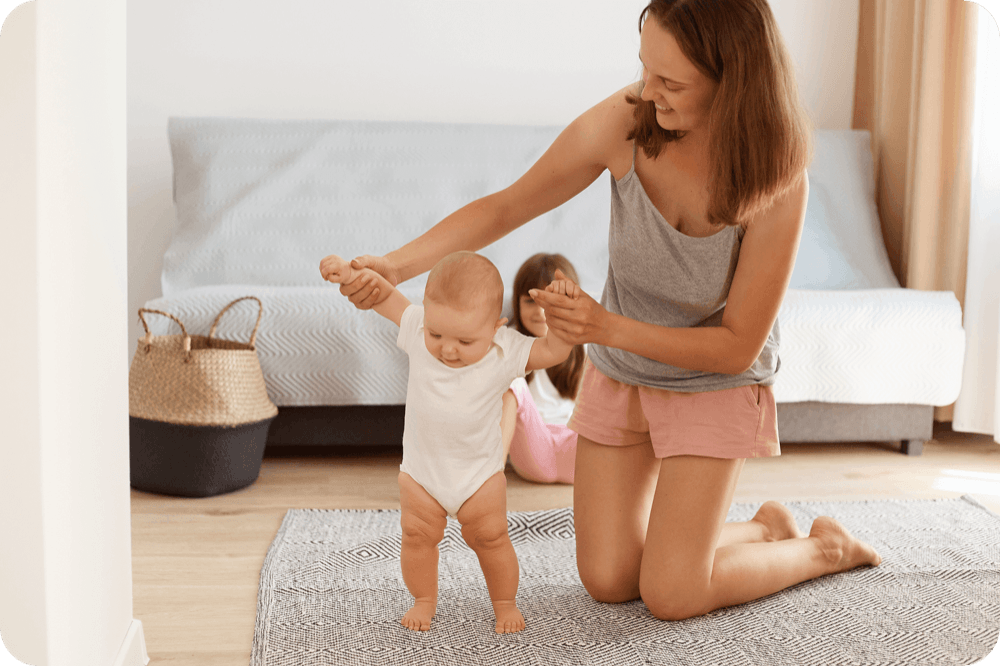
When a baby begins walking, they quickly gain a new level of freedom. They used to sit or crawl under supervision — now they can reach the cabinet, open drawers, or get near a hot kettle. Studies confirm that learning to walk significantly increases the risk of injury, especially at home, where everything feels “familiar.”
Main danger zones in the home
| Area | Potential hazard | What to do |
| Kitchen | Hot liquids, sharp objects | Use cabinet locks, move pots away from edges |
| Stairs | Falls | Install safety gates |
| Bathroom | Slippery floors, cleaning products | Add non-slip mats, lock away chemicals |
| Living room | Sharp corners, unstable furniture | Use corner guards and anchor furniture |
| Outlets | Electric shock, inserting objects | Use outlet covers |
Practical steps to babyproof your home
- Do a safety check at your baby’s eye level. Get down on all fours and “crawl” around your space — you’ll see what’s within your child’s reach.
- Barriers, locks, and padding — the three pillars of safety. Modern safety products don’t ruin the decor and are easy to install.
- Anchor anything that might fall. Especially TVs, dressers, and shelving units.
- Store cleaning supplies, medications, and sharp items out of reach. Not just on a high shelf — in a locked cabinet.
- Create a safe zone for exploration. Set up a corner of the room with soft mats, toys, and minimal hazards.
What to do if something goes wrong
- Assess the situation. Don’t panic — observe your child’s reaction.
- Rinse wounds, apply cold compresses. Even for bumps, cold helps reduce swelling.
- In serious cases or after any head injury — contact a doctor right away.
- After any incident — recheck how your space is organized.
Why safety doesn’t mean isolation
Some parents worry that a “sterile” space might limit development – but it won’t. Your child doesn’t need danger to learn. They need a space where they can safely fall, get up, explore, and gain experience.
Instead of “the home must be safe,” think: “the home must be prepared for the child’s development.”
Frequently Asked Questions About Home Safety When Your Baby Is Learning to Walk
What dangers are most common when a baby starts walking?
The most common injuries at 9–18 months are falls, bumps, burns, and poisonings. Once a baby starts walking, they can suddenly reach cabinets, drawers, hot objects, stairs, and outlets. Prepare the space early: anchor furniture, install safety gates, and remove cleaning products, medicines, sharp items, small objects, and toxic items.
How can I prepare my home for my baby's first steps?
Start by checking your home from your baby's eye level. Get down on all fours and look for what your child can reach. Anchor TVs, dressers, and shelves, cover outlets, add safety gates on stairs, use cabinet locks, and place soft guards on sharp corners.
Should I restrict my baby to prevent injuries?
No, safety does not mean stopping your baby from moving or exploring. Babies need space where they can safely fall, get up, touch objects, and learn under adult supervision. It is better to create a safe exploration zone with soft mats, toys, and minimal hazards than to forbid everything.
Why does home become riskier when a baby starts walking?
Home becomes riskier because walking gives your baby a new level of freedom. They can open drawers, reach a hot kettle, pull on furniture, and get close to outlets. Moving into an upright position increases injury risk, especially at home, where familiar surroundings may hide real dangers.
When should I contact a doctor after a fall or injury?
Contact a doctor right away after a serious injury or any head injury, even if it seems minor. Otherwise, first assess your baby's condition and reaction. Small wounds can be rinsed, and a cold compress can help reduce swelling from bumps. After any incident, recheck how your home is organized.
With care
Our articles are based on evidence-based medicine and reviewed by pediatricians. However, they do not replace a consultation with your doctor. Every child is unique — if you have any concerns, please consult a medical professional.
sprouty
Sleep, feeding, and milestones in one app
Sources
- Toddler Developmental Milestones & Safety, Cleveland Clinic, https://my.clevelandclinic.org/health/articles/22625-toddler-developmental-milestones--safety. Accessed 7 May 2026.
- You swallowed what? Parents' guide to keeping kids safe at home, Mayo Clinic, https://www.mayoclinichealthsystem.org/hometown-health/speaking-of-health/keeping-kids-safe-at-home. Accessed 7 May 2026.
- Safety in the kitchen, during feedings, near bodies of water and around burn hazards, Mayo Clinic, https://mcpress.mayoclinic.org/parenting/safety-in-the-kitchen-during-feedings-near-bodies-of-water-and-around-burn-hazards/. Accessed 7 May 2026.
- A Guide To Childproofing Your Home, Cleveland Clinic, https://health.clevelandclinic.org/a-guide-to-childproofing-your-home. Accessed 7 May 2026.
- Baby and toddler safety, UK National Health Service, https://www.nhs.uk/baby/first-aid-and-safety/safety/baby-and-toddler-safety/. Accessed 7 May 2026.
- Key practice: Managing child injuries and accidents at home, UNICEF, https://www.unicef.org/uganda/key-practice-managing-child-injuries-and-accidents-home. Accessed 7 May 2026.