What Happens to Your Baby During the Ninth Baby Leap
 Category Category | Baby leaps |
|---|


Medically reviewed by pediatrician Alexandra Zglavosiy
The ninth baby leap is a stage of structure and predictability. Your child begins not only to recognize their goals but also to work out the steps needed to reach them. Their actions become more organized, and they begin to expect certain results. They are learning to manage sequences of events and may become frustrated when things do not go according to plan.


sprouty
Sleep, feeding, and milestones in one app



Quick takeaways
- The ninth baby leap usually happens around weeks 60–64 of your child's life.
- Your child begins to build logical sequences of actions.
- They start to understand cause and effect: doing one thing leads to another.
- They may become frustrated when something does not go according to plan.
- Play becomes more structured and follows clearer sequences.
- Language and behavior are used more intentionally to achieve a goal.
- Your child may become more sensitive to limits, leading to stubbornness or tantrums.
From emotions to structure
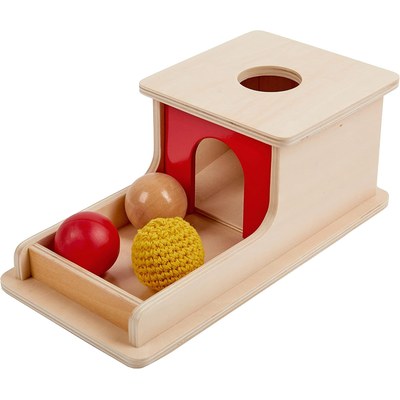
Your child no longer simply wants something — they begin to understand what they need to do and in what order to achieve it. They may build sequences such as "pick up the spoon → open the container → feed the doll" or "bring the shoes → hand them to Mom → wait to go outside."
These are the beginnings of cognitive scripts. Your child is learning that actions have an order and that individual steps are connected.





When things do not go according to plan
Your child is developing an internal idea of how things should happen. When someone disrupts that sequence — for example, when Mom serves food "the wrong way" — they may scream, refuse to eat, throw an object, or have a tantrum.
This is not simply fussiness. Your child is learning to exercise control while also facing the need to accept change. This can lead to some of their first intense experiences of frustration.
Play and motor skills
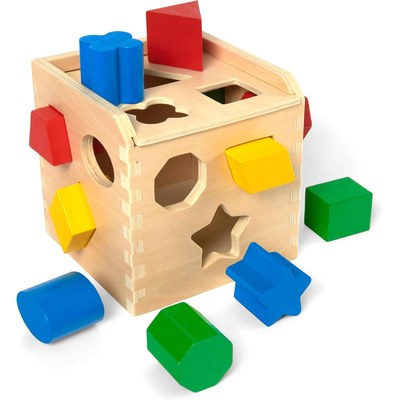
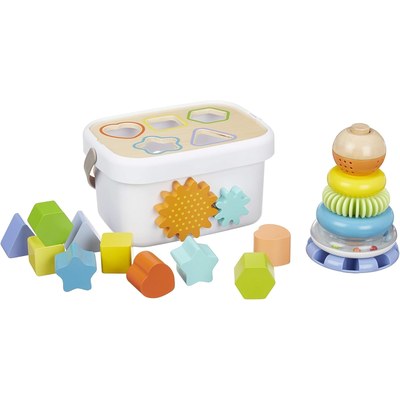
Play becomes more structured and may include building towers, sorting objects, and repeating patterns. Fine motor skills allow your child to act more precisely and complete tasks step by step. They may copy an adult's actions in a particular order: first cover the doll, then feed it.
This is no longer simple imitation. Your child is beginning to understand the logical connection between actions.




Language with intention
Your child uses language to achieve a goal. Words such as "give," "more," or "here" are used deliberately rather than by chance. They may take the same request to another adult if Mom says no. Tone of voice, gestures, and persistence become tools for influencing what happens.
Your child is learning to interact with other people in order to get a result.
Emotions and self-regulation
Your child may become angry when something does not work, feel hurt when they are not understood, or feel ashamed after being scolded. Sometimes they may cry simply because they are overwhelmed. At this stage, they are becoming aware of their reactions and looking to you for support in managing their emotions.
How to support your child
- Offer simple step-by-step tasks: "First put this here, then do that" or "Put it inside, then close it."
- Allow independence within safe limits.
- Describe the sequence of actions: "First you opened it, then you poured it in."
- Acknowledge emotions: "It's upsetting when it doesn't work" or "You're angry, but let's try again."
- Avoid sudden changes to familiar routines — predictability helps your child feel secure.
Frequently asked questions about the ninth baby leap
When does the ninth baby leap happen?
The ninth baby leap usually occurs around weeks 60–64 of your child's life. Some children may experience it a little earlier or later. The most noticeable changes often last for several days
What new skills appear during the ninth baby leap?
Children often begin creating sequences of actions, understanding cause and effect, playing in more structured ways, and using language intentionally to reach a goal. Your child may copy an adult's actions step by step and become more persistent when trying to get what they want
How can I support my child during the ninth baby leap?
Simple step-by-step tasks, descriptions of what is happening, emotional support, and predictable routines can help. Give your child opportunities to try things independently in safe situations — this helps them learn both how to pursue a goal and how to adapt when things change
Why does my child get so upset when something goes wrong?
Your child now has an internal plan and expects a particular result. When that plan is interrupted, frustration arises — this is part of learning self-control. Reactions usually become less intense as the new skills grow more familiar
With care
Our articles are based on evidence-based medicine and reviewed by pediatricians. However, they do not replace a consultation with your doctor. Every child is unique — if you have any concerns, please consult a medical professional.
sprouty
Sleep, feeding, and milestones in one app
Sources
- Plooij FX, van de Rijt H. The Wonder Weeks: How to Stimulate Your Baby's Mental Development. Kiddy World Publishing; 2017. ISBN: 978-9491882166
- National Research Council. From Neurons to Neighborhoods: The Science of Early Childhood Development. Washington (DC): National Academies Press (US); 2000. PMID: 25077268
- WHO Motor Milestones Study: https://doi.org/10.1111/j.1651-2227.2006.tb02379.x
- CDC Developmental Milestones: https://www.cdc.gov/ncbddd/actearly/milestones/index.html
- Misirliyan SS, Boehning AP, Shah M. Development Milestones. StatPearls. 2023. PMID: 32491450
- WHO Child Growth Standards: https://www.who.int/tools/child-growth-standards
Disclosure: Some links point to products we genuinely find helpful for this topic. If you buy through them, we may earn a small commission — at no extra cost to you.