What Happens to Your Baby During the Sixth Baby Leap
 Category | Baby leaps |
|---|


Medically reviewed by pediatrician Alexandra Zglavosiy
The sixth baby leap is a stage of sorting and new skills. Your baby begins to group objects by category, use toys meaningfully, gesture more actively, and imitate adults. They may ask to be held more often or seem more anxious — this is temporary and part of emotional development.


sprouty
Sleep, feeding, and milestones in one app



Quick takeaways
- The sixth baby leap usually occurs around weeks 34–37.
- During this period, babies begin to organize information and group objects by category.
- Your baby may show fear of strangers and seek comfort from mom more often.
- New forms of communication, gestures, and imitation appear.
- This period may include fussiness, sleep disturbances, and behavioral regression — this is normal and temporary.
Categories and meaning: how thinking develops
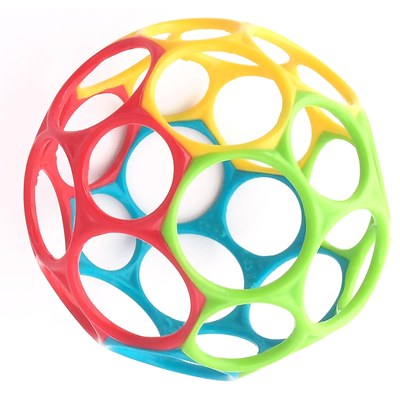
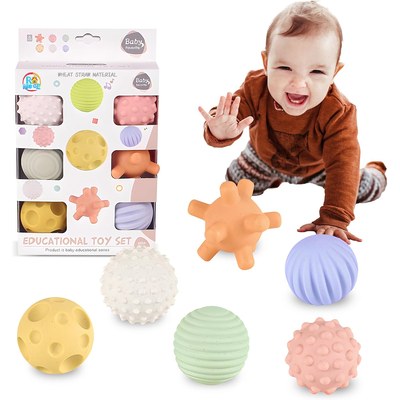
The sixth baby leap is often called the category leap. It’s when your baby begins to notice that things can be similar — in shape, color, or function. They recognize favorite toys, distinguish between a cup and a spoon, a small ball and a big ball.
This is also the stage when babies start using objects purposefully — brushing their hair with a brush or trying to feed a doll with a spoon. They imitate what they’ve seen, which is an important milestone that shows understanding of an object’s purpose.




New forms of communication
By this age, babies actively use gestures: reaching out their arms, waving goodbye, handing over objects. They may point, ask, or share. All of this shows growing awareness of social cues and a stronger need for interaction.
More anxiety, more attachment
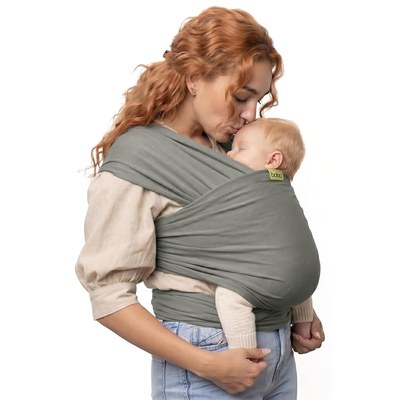
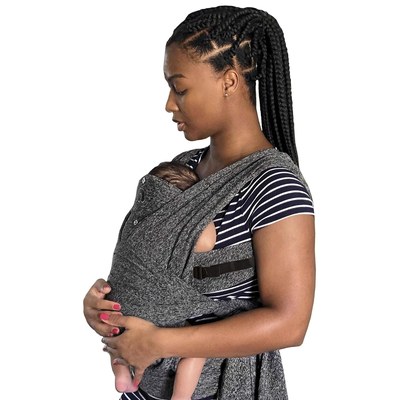
Separation anxiety often increases: babies cling to their moms, don’t want to be left with others, and resist unfamiliar environments. This is temporary and part of developing attachment — a crucial emotional skill.
Possible fussiness and sleep regression
As with other baby leaps, babies may sleep poorly, wake more often, act fussier, or demand more attention. This is linked to brain restructuring. The best approach is patience, responsiveness, and keeping familiar routines without introducing short-term changes.
Frequently asked questions about the sixth baby leap
When does the sixth baby leap happen?
Usually, the sixth baby leap occurs around weeks 34–37 of life, when a baby's perception of the world begins to change significantly. During this stage, the baby starts noticing similarities between objects and grouping them into simple categories. This is an important step in cognitive development and early information organization.
What new skills appear during the sixth baby leap?
Often, new skills appear during this period: the baby begins to use familiar objects more purposefully and imitate adult behavior. New gestures also emerge, such as pointing, handing over objects, or waving goodbye. These changes reflect growing cognitive and social development.
How can I support my baby during the sixth baby leap?
It is helpful to show how everyday objects are used and encourage the baby to repeat adult actions. Maintaining a calm routine, predictable environment, and emotional support makes this phase easier. This helps the baby adapt to changes and reduces stress during the baby leap.
Why is my baby more clingy and wary of strangers?
This is often related to separation anxiety and a stronger emotional attachment to caregivers. At this stage, babies become more sensitive to unfamiliar people and environments and seek more physical closeness. This is a normal developmental phase of emotional bonding.
With care
Our articles are based on evidence-based medicine and reviewed by pediatricians. However, they do not replace a consultation with your doctor. Every child is unique — if you have any concerns, please consult a medical professional.
sprouty
Sleep, feeding, and milestones in one app
Sources
- Plooij FX, van de Rijt-Plooij H. The Wonder Weeks: How to Stimulate Your Baby's Mental Development and Help Him Turn His 10 Predictable, Great, Fussy Phases into Magical Leaps Forward. Kiddy World Publishing; 2017. ISBN: 978-9491882166
- Child growth standards, WHO, https://www.who.int/tools/child-growth-standards/standards. Accessed 7 May 2026.
- 12 month developmental milestones, UK National Health Service, https://www.cambspborochildrenshealth.nhs.uk/child-development-and-growing-up/milestones/12-months/.
- National Research Council (US) and Institute of Medicine (US) Committee on Integrating the Science of Early Childhood Development. From Neurons to Neighborhoods: The Science of Early Childhood Development. Shonkoff JP, Phillips DA, editors. Washington (DC): National Academies Press (US); 2000. PMID: 25077268. https://pubmed.ncbi.nlm.nih.gov/25077268/.
- and de Onis, M. (2006), WHO Motor Development Study: Windows of achievement for six gross motor development milestones. Acta Pædiatrica, 95: 86-95. https://doi.org/10.1111/j.1651-2227.2006.tb02379.x. Accessed 7 May 2026.
- CDC’s Developmental Milestones, U.S. Centers for disease control and prevention, https://www.cdc.gov/ncbddd/actearly/milestones/index.html. Accessed 7 May 2026.
- Toddler Developmental Milestones & Safety, Cleveland Clinic, https://my.clevelandclinic.org/health/articles/22625-toddler-developmental-milestones--safety. Accessed 7 May 2026.
- Misirliyan SS, Boehning AP, Shah M. Development Milestones. 2023 Mar 16. In: StatPearls [Internet]. Treasure Island (FL): StatPearls Publishing; 2025 Jan–. PMID: 32491450. https://pubmed.ncbi.nlm.nih.gov/32491450/
Disclosure: Some links point to products we genuinely find helpful for this topic. If you buy through them, we may earn a small commission — at no extra cost to you.